



Cyprus is often associated with its Mediterranean coastline, but some of the island’s most compelling stories are found further inland, among ancient ruins, archaeological sites and monuments that have survived for centuries.
Positioned at the crossroads of the Eastern Mediterranean, Cyprus has been shaped by successive civilisations, cultures and religions. From prehistoric settlements to ancient kingdoms and Roman cities, its archaeological landscape offers a remarkable record of how people lived, worshipped and built communities on the island.
What makes the ancient sites of Cyprus particularly interesting is their variety. Some stand beside the sea, others are hidden among hills and villages, while many reveal a connection between mythology, religion, trade and everyday life.
Exploring them is not simply a journey through ruins. It is a journey through the different chapters of Cyprus’ history.
Where Cyprus’ Story Begins
Long before ancient kingdoms and classical cities appeared, communities were already establishing permanent settlements on the island.
One of the most important examples is Choirokoitia, a Neolithic settlement that offers a glimpse into life thousands of years ago. The site preserves the remains of circular dwellings and other structures associated with one of the earliest settled communities in Cyprus.
What makes Choirokoitia especially fascinating is the sense of everyday life it provides. Rather than monumental temples or grand public buildings, the site reveals how ordinary communities organised their homes, worked, lived and interacted with their environment.
Its importance extends beyond Cyprus. Choirokoitia is recognised as a UNESCO World Heritage site and is considered one of the most significant prehistoric sites in the Eastern Mediterranean.
It represents a much earlier chapter of Cyprus — one that existed long before the island’s ancient cities became centres of trade, religion and political power.
A City Above the Sea
Few ancient sites in Cyprus have a setting quite like Kourion.
Perched on a hillside overlooking the Mediterranean, the remains of this ancient city combine archaeology with a dramatic landscape. Its position immediately gives an impression of why the location would have been important, while the surviving buildings reveal the scale and sophistication of the community that once occupied it.
The ancient theatre is among its best-known features and remains one of the most recognisable archaeological landmarks on the island. Nearby, visitors can discover Roman-era mosaics, public buildings, baths and the remains of private residences.
Kourion also tells a story about the changing cultures of Cyprus. Its history stretches across different periods, reflecting the influence of Greek, Roman and other Mediterranean civilisations.
Standing among the ruins with the sea below, it becomes easier to imagine Kourion not as an archaeological site, but as a functioning city — a place where people lived, worked, worshipped and gathered.
The Tombs of the Kings: An Ancient World Carved in Stone
The name Tombs of the Kings sounds as though the site belongs to royalty. In reality, no kings are known to have been buried there.
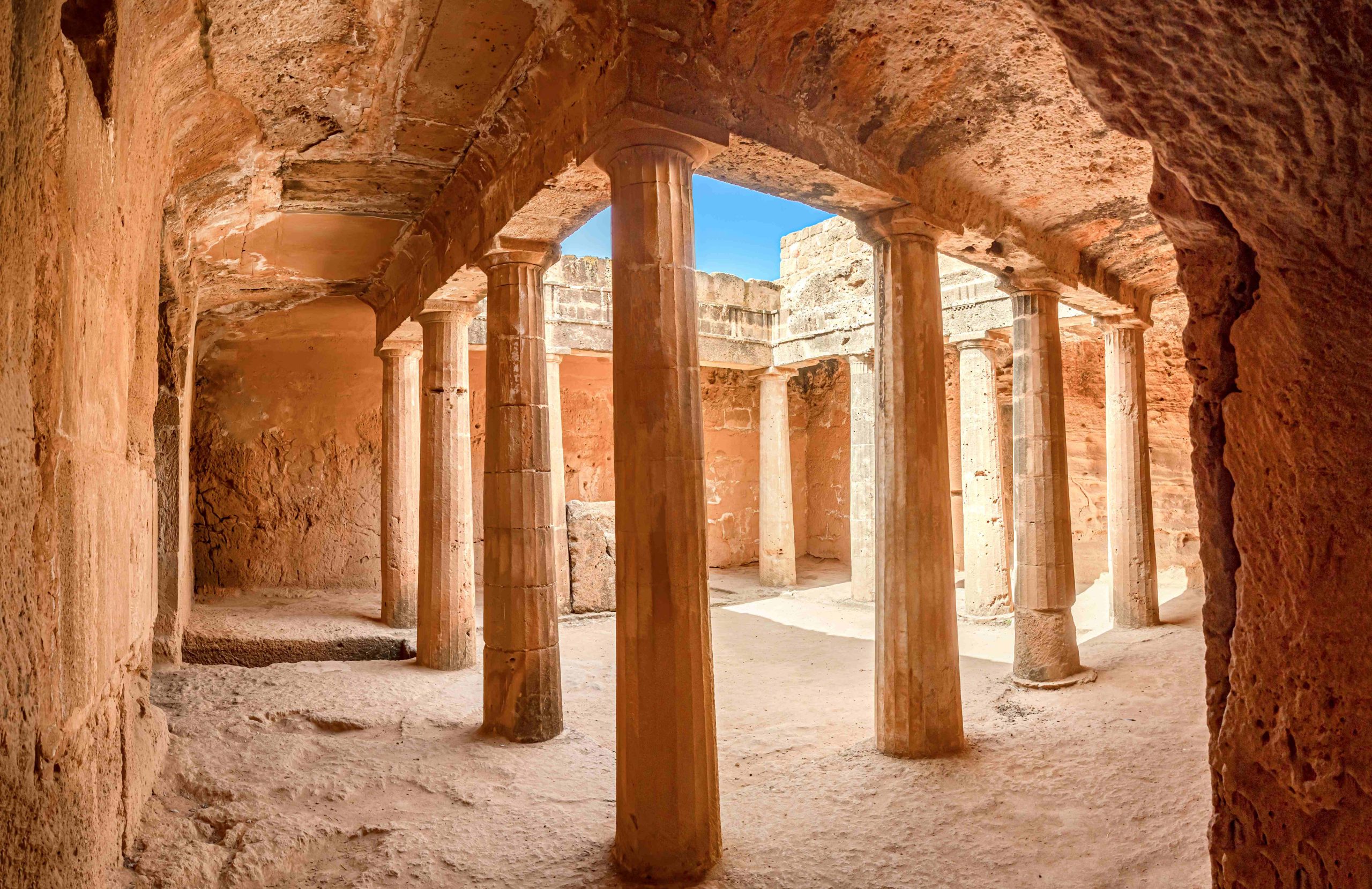
Located near Paphos, the impressive underground tombs date mainly from the Hellenistic and Roman periods. Their monumental scale, columns and carefully constructed burial chambers reflect the status of the people for whom they were created.
The tombs were carved from the rock, with some designed to resemble the houses of the living. This provides an intriguing insight into ancient attitudes towards death and the belief that the social identity of the deceased should continue beyond life.
Walking through the site today, the atmosphere is very different from that of a traditional city ruin. There are no theatres or public squares. Instead, the architecture is centred around burial and remembrance.
It is one of the places in Cyprus where archaeology offers a particularly direct glimpse into how ancient societies understood status, family and death.
Apollo Hylates: The Sanctuary and Its Ancient Story
Religion was deeply woven into life in ancient Cyprus, and few sites demonstrate this more clearly than the Sanctuary of Apollo Hylates near Kourion.
Apollo Hylates was associated with forests and nature, and the sanctuary became an important religious centre in the ancient city of Kourion. The remains include parts of the temple complex, columns, baths and other structures associated with religious activity.
The site also illustrates how closely ancient religion was connected to the natural environment.
Rather than existing as an isolated monument, the sanctuary formed part of a wider landscape. Its location and connection to Apollo Hylates reflect the importance that ancient communities placed on the relationship between the divine world and nature.
For modern visitors, the ruins provide an opportunity to explore a side of ancient Cyprus that is less visible in the island’s urban archaeological sites: the beliefs and rituals that shaped everyday life.
Salamis: The Ancient City by the Sea
On the eastern side of Cyprus, the ancient city of Salamis offers a different sense of scale.
Once an important centre of political, commercial and cultural life, Salamis developed into one of the island’s major ancient cities. Its ruins include a theatre, gymnasium, baths, colonnaded spaces and other structures that reveal the complexity of urban life.
The theatre is particularly impressive, providing a reminder of the importance of public entertainment and communal spaces in the ancient world.
The remains also reflect the many cultural influences that shaped Cyprus over time. Greek traditions, Roman architecture and later developments can all be found within the archaeological landscape.
Walking through Salamis can therefore feel like moving through several periods of history at once.
Its location near the sea adds another dimension. Cyprus’ position in the Eastern Mediterranean was central to its history, and Salamis demonstrates how closely commerce, culture and geography were connected.
Amathus: One of Cyprus’ Ancient Kingdoms
On the outskirts of modern Limassol lies Amathus, one of the ancient city-kingdoms of Cyprus.
The city played an important role in the island’s history and was closely associated with the worship of Aphrodite, the goddess whose mythology has become deeply connected with Cyprus.
The archaeological remains include parts of the agora, baths, streets and religious structures, while the elevated location offers views towards the Mediterranean.
Amathus is particularly interesting because it demonstrates the connection between mythology and the physical landscape.
The association with Aphrodite is not simply a modern tourism story. The goddess was genuinely worshipped on the island, and ancient sanctuaries dedicated to her formed an important part of Cypriot religious life.
Today, the remains provide a fascinating link between the mythology associated with Cyprus and the archaeological evidence left behind by the communities who lived there.
Ancient Mosaics That Still Tell Their Stories
Some of the most remarkable examples of ancient art in Cyprus are found in Paphos, particularly in the Roman-period mosaics of the Archaeological Park.
These mosaics are remarkable not only for their craftsmanship but also for the stories they depict.
Scenes from Greek mythology appear across the floors, including representations of gods, heroes, animals and mythological episodes. Their level of detail offers an insight into the artistic traditions and cultural influences present in Cyprus during the Roman period.
What makes them particularly engaging is that they can be read almost like illustrated stories.
The figures, symbols and scenes reveal what ancient homeowners and communities considered meaningful, while the quality of the workmanship demonstrates the importance of decorative art within elite Roman homes.
For visitors, these mosaics provide one of the clearest reminders that ancient Cyprus was not a distant or isolated society. It was part of a much wider Mediterranean cultural world.
More Than Ruins
The ancient sites of Cyprus are often described as archaeological attractions, but that description does not quite capture what makes them interesting.
Choirokoitia tells the story of early settled communities. Kourion reveals the scale and complexity of an ancient city. The Tombs of the Kings offer insight into death, status and remembrance. The Sanctuary of Apollo Hylates reflects the religious beliefs of another age, while Salamis and Amathus demonstrate the importance of cities, trade and mythology.
Together, these places reveal an island that has never existed in isolation.
Cyprus has been shaped by movement — of people, ideas, religions, languages and cultures. Its ancient sites preserve evidence of those encounters and provide a way to understand how the island developed over thousands of years.
That is what makes exploring ancient Cyprus so rewarding.
You are not simply looking at ancient ruins. You are stepping into fragments of lives lived thousands of years ago — tracing the beliefs, ambitions and everyday experiences of people whose world may have disappeared, but whose stories still shape the Cyprus we know today.